Back to Blog
December 16, 2025
Installing a standby generator in your Connecticut home is one of the smartest moves you can make for year-round peace of mind. But before your generator can be powered on, there’s one important step that homeowners often overlook: permitting and local compliance.
Permitting for generators in Connecticut isn’t one-size-fits-all. While state building codes lay the groundwork, town-specific requirements, zoning rules, and even HOA restrictions can impact your installation timeline, placement, and total project cost.
This guide breaks down what you need to know, whether you’re installing a whole-home generator in Fairfield County, navigating utility approvals in Hartford, or just curious about how town permitting works across the state.
Understanding Generator Permitting in Connecticut
Installing a standby generator requires careful planning, compliance with state and local codes, and coordination with licensed contractors. Luckily, when you work with PE Home Generators, we handle the entire permitting process for you.
When a Permit Is Legally Required
In Connecticut, a permit is almost always required for standby generator installations. Depending on your setup, this may include:
- Electrical permits for wiring and transfer switch installation
- Fuel/gas permits for propane or natural gas connections
- Building permits for any trenching, structural pads, or enclosures
Permits are typically required for both residential and commercial generator systems. In fact, even some portable generators, especially those tied into a home’s electrical panel via a manual transfer switch, may require permits and inspection.
Skipping this step can lead to fines, failed inspections, or even being forced to remove the generator entirely, so it’s not something to leave to chance.
Who Can Pull a Permit in Connecticut
In Connecticut, generator permits must be pulled by licensed professionals, including:
- Licensed electricians (for electrical work and transfer switch wiring)
- Licensed plumbers or gas fitters (for gas line work)
- Licensed HVAC contractors, if the install involves ventilation or tied-in systems
Homeowners typically can’t pull these permits themselves unless they’re licensed and performing 100% of the work, which is rare for generator projects. That’s why most installations are completed by companies like PE Home Generators, who handle all permitting and compliance from start to finish.
What to Expect When PE Handles Your Permitting
At PE Home Generators, our goal is to make the installation process straightforward and stress-free. That includes:
- Filing all required permits with your town or municipality
- Coordinating utility connections, pad placement, and trenching (if needed)
- Ensuring your system is compliant with local and state regulations
- Handling all scheduling for inspections and approvals
You won’t have to worry about paperwork, red tape, or zoning headaches. All we ask from you is to approve the layout and confirm the installation schedule.
Installations are typically completed in one day with minimal disruption to your property.
Statewide Codes and Regulations for Standby Generators
While towns can add their own layers of approval, all generator installations in Connecticut must comply with state-level building, electrical, and safety codes.
Connecticut State Building Code Requirements
Generators must be installed in accordance with:
- 2022 Connecticut State Building Code (CSBC)
- NFPA 110 for emergency and standby power systems
- Manufacturer’s clearance and placement specs
Concrete pads, equipment clearances, and anchoring methods must align with code to pass inspection.
Electrical and Transfer Switch Standards
All transfer switches must meet:
- NEC (National Electrical Code) guidelines
- Proper grounding and overcurrent protection
- No backfeeding into the utility grid
Installations also require disconnecting means and labels per code, often verified by both the local inspector and utility company.
Fuel and Gas Piping Regulations
If your generator uses propane or natural gas, piping and connection must meet:
- NFPA 54 (National Fuel Gas Code)
- CT state fuel gas codes
- Pressure testing and leak checks
Regulators and shut-off valves must be accessible and marked. Underground piping typically requires an additional inspection.
DEEP Rules for Emergency Generators
The Connecticut Department of Energy & Environmental Protection (DEEP) oversees emissions compliance for generators over a certain size. Most residential systems under 50kW are exempt from DEEP air permitting, but larger or commercial systems may require:
- Air quality notifications
- Noise abatement considerations
- Annual operation limits
Local Permitting Requirements Across Connecticut Towns
Common Permit Types Required by Municipalities
Depending on your town, you may need:
- Electrical permit
- Fuel/gas permit
- Zoning permit or variance
- Mechanical permit (less common)
- Site plan or plot plan
Some towns bundle these under one application; others require separate submissions.
Documentation Typically Requested by Towns
You’ll likely be asked to submit:
- Site plan showing generator placement
- Product specification sheet (from manufacturer)
- Contractor licenses and insurance
- Load calculation or usage estimate
- Fuel piping diagrams (for propane/natural gas)
Towns like Greenwich and Westport are known for stricter documentation and placement rules, often requiring zoning approval before the building department signs off. You can view an example of local guidance from Greenwich’s Generator Page.
Town-by-Town Variations in Permitting and Approvals
Connecticut towns vary widely in their permitting timelines, requirements, and enforcement. Here’s what to expect:
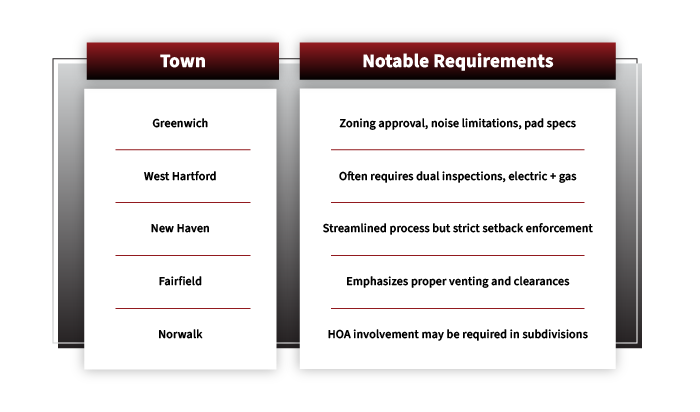
These differences highlight the importance of working with a local installer who knows the ins and outs of municipal requirements.
Zoning Rules That Affect Generator Placement
Zoning rules typically dictate:
- Setbacks from property lines
- Minimum clearance from structures
- Distance from windows, vents, or AC units
- Noise limitations (often enforced near lot lines)
In some cases, if your proposed placement doesn’t meet the setback requirement, you may need a zoning variance, which can add weeks to your project timeline.
Inspection Requirements for Standby Generators
Once the generator is installed and connected, it must pass final inspection(s) before use.
This usually includes:
- Electrical inspection (transfer switch, wiring, grounding)
- Gas inspection (leak testing, regulator checks)
- Zoning inspection (to confirm placement and clearances)
In some towns, these inspections must occur in a specific order or within a set window after permit approval.
Utility Coordination and Safety Requirements
Utility Notification and Approval Processes
If your generator includes an automatic transfer switch (ATS), your electric utility must be notified. In some areas, the utility will:
- Require signed forms from the installer
- Request a load calculation
- Conduct a final review before activation
Transfer Switch Verification and Backfeed Prevention
Inspectors and utilities want to ensure there’s zero chance of backfeed into the grid, which could endanger linemen during outages. A properly installed transfer switch is key here.
When Service Upgrades May Be Required
In older homes, your electrical service may not support a generator’s additional load. In these cases, your installer may recommend a service panel upgrade to meet code and utility requirements.
HOA Rules and Neighborhood Restrictions
If you live in a planned neighborhood, HOA rules may affect:
- Generator size and placement
- Visibility from street or neighboring yards
- Noise levels
- Approved contractor lists
Always check your community’s HOA documents before installing; some associations may require approval or even architectural review.
Portable vs. Standby Generator Regulations
Portable generators have fewer permitting requirements, but they’re not exempt from safety rules.
Portable generator basics:
- No permit needed if not hardwired to the home
- Manual transfer switch installation does require a permit
- Must follow exhaust safety rules (at least 20 feet from openings)
If you’re upgrading from portable to standby, your installer will remove any outdated or non-compliant hookups as part of the transition.
Residential vs. Commercial Installation Considerations
Commercial generator installs (including small businesses and apartment complexes) face:
- Higher permitting thresholds
- Additional DEEP oversight
- More robust utility approval
- Stricter noise compliance
If you’re installing a system for a multi-unit property, consult with an expert early to ensure you’re following commercial-grade standards.
Talk to the Connecticut Generator Experts
At PE Home Generators, we’ve handled hundreds of installations across dozens of CT towns, each with its own unique rules, paperwork, and inspection quirks.
We take care of:
- Town permitting and submission
- Site plans and required documentation
- Scheduling inspections and coordinating with utilities
- Ensuring your system meets all code and zoning requirements
Whether you’re just getting started or already planning placement, our team can walk you through everything, from paperwork to power-up.Call today or request your free generator quote online.
Recent News
5 Common Myths About Home Generators Debunked
January 20, 2026
What to Expect During the Home Generator Installation Process
January 14, 2026
The Top 8 Home Projects with the Highest Return on Investment
November 12, 2025
Can You Run a Generator During a Snowstorm or Nor’easter?
November 3, 2025
Portable vs. Standby: Choosing the Right Generator for Your CT Home
October 20, 2025

5 Reasons a Standby Generator Is One of the Smartest Investments You Can Make for Your Home
October 20, 2025