Back to Blog

July 27, 2026
You know the feeling. One moment you’re on a video call, coffee in hand, with the refrigerator humming in the background. The next, everything goes silent. The screen goes dark. In the kitchen, the microwave clock resets to 12:00—again.
For most of us, a power outage used to be a rare novelty. You lit a few candles, complained to a neighbor, and the lights came back on within the hour. Life resumed and no real harm was done.
That experience is disappearing.
Power outages across the United States are growing in frequency and length. Data from the U.S. Energy Information Administration (EIA) shows that the average American utility customer recently spent more hours in the dark than at any point in the last decade. This trend is no fluke. It reflects deep, structural pressures building against a grid that was never built for modern life.
This is a practical reality every homeowner must face. Once you understand why the grid is struggling, the next step is clear: you need to protect your home, your wallet, and your family from a system you can no longer trust blindly.
The Perfect Storm: Why the Grid Is Failing More Often
The power grid fails because three major pressures are hitting it at once: old equipment, wild weather, and a massive surge in electricity demand.
1. An Aging Grid Built for the Past Century
The backbone of America’s electrical system—the lines, substations, and transformers—was mostly built between the 1950s and 1970s. Engineers designed this infrastructure to last about 40 to 50 years. A quick look at the calendar reveals the problem: a huge portion of the grid is running on borrowed time.
The American Society of Civil Engineers gives U.S. energy infrastructure a mediocre grade on its report card every year, warning that the system needs massive upgrades. Transformers built during the Eisenhower administration are currently trying to handle the power flowing into modern smart homes packed with high-draw appliances and EV chargers.
When old equipment meets peak demand, the system snaps. Imagine a sweltering August afternoon when every air conditioner in the neighborhood runs at top speed. A transformer that easily handled the neighborhood load in 1985 simply buckles under the demands of today.
Utility companies are replacing parts, but the scale of the job is enormous. Upgrades are moving slower than the rate of decay.
2. Extreme Weather as the New Normal
Old infrastructure is the weakness; extreme weather is the force that exposes it.
A volatile climate hits grid reliability directly. Intense heatwaves send power demand soaring as millions of air conditioners strain to keep homes safe. Severe winter storms, like the 2021 Texas freeze, knock out power generation and power lines simultaneously, leaving millions freezing in the dark for days. In the West, utilities now intentionally shut off power during high winds to keep sagging lines from sparking catastrophic wildfires.
High winds topple poles. Ice storms snap lines under immense weight. Floods drown substations. On their own, these events are manageable. Occurring back-to-back against an already fragile system, they cause widespread failure.
3. The “Electrification of Everything” Meets the Green Transition
Here is the central paradox of modern energy.
We are actively shifting toward electricity to cut carbon emissions. Electric vehicles are replacing gas cars. Heat pumps are replacing gas furnaces. Smart appliances are multiplying. This is necessary environmental progress, but it puts an unprecedented burden on the wires outside your house.
At the same time, the grid is moving away from traditional power plants like coal and nuclear facilities that provide steady, predictable power around the clock. In their place, we are adding renewable sources like solar and wind. These sources are cleaner, but they depend on the weather. The sun sets, and the wind dies down.
Fixing this mismatch requires massive investments in industrial batteries and smart grid technology. That work is happening, but it takes decades. In the meantime, the gap between power supply and power demand triggers rolling blackouts during peak hours.
The Invisible Tax: What Unreliable Power Costs Your Household
Most conversations about blackouts focus on small annoyances like boredom or melting ice cream. The actual cost of an unreliable grid is far higher. It is a quiet financial drain that hits you outage by outage.
The Financial Toll of Food Spoilage and Property Damage
Let’s start with the kitchen. The USDA recommends throwing away refrigerated food after just four hours without power. Freezer contents can spoil within 24 to 48 hours. Replacing a fully stocked fridge and freezer can easily cost several hundred dollars. A single storm that knocks out power for a few days wipes out that entire grocery investment.
Then there is your basement. Sump pumps keep groundwater away from your foundation. When the power goes out during a heavy rainstorm—the exact moment you need the pump most—it stops working.
A flooded basement means ruined floors, destroyed belongings, and mold. Mold cleanup is incredibly expensive. Remediation can cost thousands of dollars, and standard homeowner’s insurance rarely covers water backup without a special, expensive rider.
In winter, extended blackouts cause interior temperatures to drop fast. Frozen pipes burst, causing catastrophic water damage that requires major renovations.
The Remote Work Vulnerability
The rise of home offices has changed the stakes. When you work from home, an outage cuts into your income and professional standing.
The moment the power dies, your router, modem, and external monitors go dark. Your laptop battery starts ticking down. A sudden disconnect during a client pitch or a tight deadline means missed deliverables and lost billable hours.
For freelancers and small business owners, this vulnerability is severe. You have no corporate IT department to rescue you. If the grid fails, your business closes.
Security and Medical Risks
Unreliable power also compromises your safety.
Home security cameras, smart locks, and alarms rely on continuous electricity. Battery backups last for a few hours, not days. A prolonged outage leaves your home unprotected during the chaotic aftermath of a major storm.
Temperature control is a health issue. Losing air conditioning during a severe heatwave puts elderly relatives, infants, and vulnerable family members at medical risk.
For the millions of Americans who rely on home medical devices—like oxygen concentrators, CPAP machines, or infusion pumps—a blacked-out home is an immediate emergency.
Taking Control: How to Protect Your Home from Grid Failures
You cannot fix the grid, but you can protect your property. Safeguarding your home does not require an all-or-nothing investment. You can start small and build up based on your budget.
Step 1: Low-Cost Emergency Prep (The 72-Hour Plan)
Every household needs a baseline survival plan. Emergency agencies recommend preparing for three days of complete self-sufficiency.
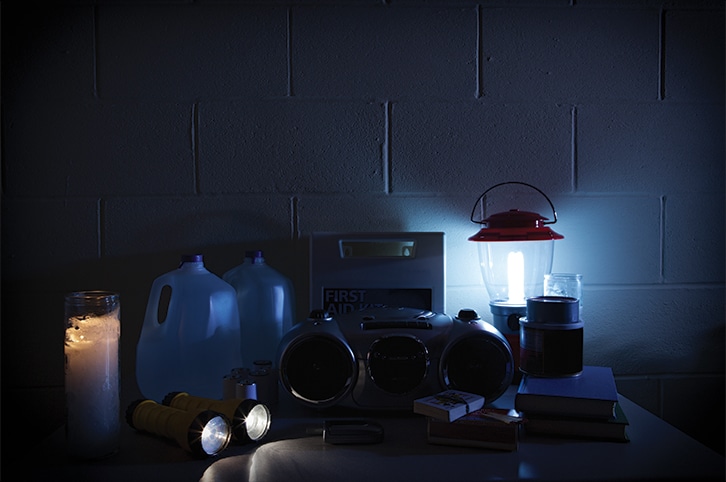
- Water: Keep one gallon of water per person, per day, for drinking and sanitation.
- Food: Stock a three-day supply of non-perishable food that requires no cooking.
- Light: Stash LED flashlights and fresh batteries in easily accessible drawers.
- Information: Keep a hand-crank or battery-powered radio to get emergency alerts when cell towers fail.
- Basics: Store a manual can opener, a solid first aid kit, and an emergency supply of critical medications.
- Paper backup: Write down vital phone numbers on paper. Your cell phone battery will eventually die.
This plan costs very little and takes one afternoon to put together. It won’t keep your lights on, but it keeps your family safe.
Step 2: Protecting Your Tech (UPS Devices and Portable Power Stations)
If you work remotely, your next step is keeping your data and communication online during short outages.
Uninterruptible Power Supplies (UPS) are small, affordable battery backups with built-in surge protection. You plug your internet router and modem directly into them. When the power goes out, the UPS takes over instantly without dropping your connection. It keeps your internet alive for anywhere from twenty minutes to a few hours, giving you plenty of time to finish your work or gracefully save your data. They also protect expensive electronics from the electrical surges that happen when the grid turns back on.
Portable power stations offer a much larger buffer. These are high-capacity lithium batteries—essentially giant versions of the power bank you use for your phone. They charge through a standard wall outlet or portable solar panels. A good power station can run a refrigerator for several hours, keep your laptops charged, run a CPAP machine overnight, and power LED lamps inside your house. They are completely silent, emit no fumes, and are safe to use indoors.
Step 3: Comprehensive Backup (Standby Generators vs. Solar Batteries)
If you want whole-house protection during extended disasters, you have two real options.
Whole-Home Standby Generators
These units are permanently installed outside your home and hook directly into your electrical panel. They run on natural gas or liquid propane. When the grid drops, an automatic switch fires up the generator within seconds.
- The Pros: They run your entire house, including heavy loads like central AC, sump pumps, and large appliances. They provide unlimited runtime as long as utilities supply fuel.
- The Cons: High upfront costs for purchase and professional installation. They require regular mechanical maintenance, and they make noticeable noise.
Solar Battery Backup Systems
These systems pair rooftop solar panels with large wall-mounted batteries, like the Tesla Powerwall.
- The Pros: Clean, silent power. During normal times, they lower your daily electric bills by storing excess solar energy. During an outage, they keep your critical circuits running smoothly, recharging every morning when the sun comes up.
- The Cons: Very high initial purchase price. Your ability to recharge depends entirely on daily sunlight, meaning their performance drops during extended, cloudy winter storms.
Which Is Right for You?
It depends on your climate and budget. If you live in an area prone to multi-day outages from ice storms or hurricanes, the unlimited runtime of a gas generator makes sense. If you live in a sunny state and want lower monthly utility bills alongside emergency backup, solar-and-battery is the better investment.
Securing Peace of Mind in an Unpredictable Future
The grid is out of your hands, but your home’s readiness is not. A few emergency supplies and battery backups can help in a short outage, but they may not be enough to protect your refrigerator, sump pump, heating and cooling system, security devices, or essential appliances during a longer blackout.
A professionally installed whole-home generator gives your household a dependable backup power source when the utility grid fails. With automatic operation, your generator can restore power within seconds, helping keep the systems your family relies on running when severe weather or unexpected outages occur.
PE Home Generators helps homeowners choose and install backup generator solutions based on their home, power needs, and budget. Whether you need coverage for a few essential circuits or want whole-home protection, the right system can provide greater confidence before the next storm arrives.
Don’t wait until the lights go out to determine what your home can handle. Contact PE Home Generators today to schedule a consultation and find the right standby generator solution for your home.
Recent News
Generac vs. Kohler: Which Whole-House Generator Is Right for Your Home?
September 29, 2026
How Long Can a Home Generator Run During a Power Outage?
September 29, 2026

Smart Homes Need Reliable Power: Keeping Modern Homes Running Without Interruption
September 3, 2026
The Most Common Problems Homeowners Face and How to Prevent Them
August 20, 2026
El Niño: What Does El Niño Mean for Connecticut and How to Be Prepared
July 29, 2026
Why Today’s Homes Are Using More Power Than Ever Before
July 27, 2026