
Back to Blog
April 14, 2026
The Connecticut shoreline is one of the most beautiful places in the world, and also one of the best places to own a whole-home generator. Home generators help keep your home functional after an ocean storm knocks out grid power. With a generator on your property, you can keep the lights on, open the refrigerator, and continue to use your HVAC system.
Backup home generators need regular generator service when exposed to salty ocean air. With proper generator upkeep, your home generator can continue to run reliably for years to come.
How Salt Air Affects Metal Components And Outdoor Mechanical Systems
Ocean air carries salt and moisture that accelerate metal corrosion. In coastal environments, constant exposure to salt and humidity can affect metal surfaces of all types, including your home generator casing and components. Over a long time, corrosion from salt and humidity can lead to reduced service life and increased need for repairs. Maintaining the generator through regular cleaning and other upkeep can help extend its service life.
Generator Parts Most Vulnerable To Salt Air
Many parts of the generator are vulnerable to salty ocean air.
- Exterior housing: Metal enclosures can begin to rust when regularly exposed to salt.
- Fasteners: The nuts and bolts that hold the enclosure and generator together can begin to rust, making them hard to tighten and loosen.
- Electrical connections: Moisture combined with regular temperature fluctuations can cause electrical connections to loosen over time.
- Cooling systems: Salty air can cause pitting and corrosion on cooling systems, whether it’s an air-cooled generator (smaller units) or a liquid-cooled generator (larger units).
Signs Salt Air Is Affecting A Generator
Inspect for rust, corrosion, and peeling paint on the generator’s exterior casing and internal components. Around electrical connections, inspect for a whitish residue.
During inspections or when servicing your unit, you may notice it’s more difficult to loosen bolts and nuts due to the rust and corrosion inside.
Installation And Placement For Coastal Homes
Corrosion protection starts with proper installation. Hiring an experienced and reputable company to install your whole-home generator helps ensure that your generator is optimal for your location and properly positioned on your property.
Elevation And Spacing Considerations For Shoreline Homes
A good generator company will choose a strategic location to ensure proper airflow while ensuring code compliance and flood safety.
Why? Because saltwater and moisture collect in low-lying areas, where the unit would be at risk of flooding from storm surge. Generators placed too close to walls and landscaping also may not get proper airflow. A good home generator installation company will understand these risks and help you avoid them.
Corrosion-Resistant Mounting Hardware And Materials
Another way to protect your home generator is to use corrosion-resistant mounting hardware and materials, like stainless steel. In coastal areas, reputable generator installation companies avoid installing units with mounting hardware that’s vulnerable to corrosion.
Weather-Resistant Generator Enclosures
Enclosures that are designed for coastal homes are more durable in salt-air environments. Aluminum casings are corrosion and rust-resistant, to withstand years of use in a coastal environment. Good generator companies also take the time to ensure the enclosure is on properly to minimize exposure to the interior components.
Proper Drainage And Base Installation
The base where the generator is installed can have long-term consequences for the generator itself. Proper grading around the generator directs water away from the unit and prevents standing water that could accelerate corrosion. Laying gravel or drainage layers beneath the base can help with drainage as well.
Maintenance Practices That Help Prevent Salt Air Damage
Routine maintenance is important for Generac home generators, especially for units in coastal environments. Preventive care reduces the need for costly repairs and can extend the service life of your generator by years.
Manufacturer-Approved Cleaning Methods To Remove Salt Deposits
As a homeowner, you can wash your generator yourself or hire a trusted generator company to do it for you. When washing your generator, use manufacturer-approved cleaning methods to avoid damaging the unit or compromising the warranty.
Washing Generator Enclosures Safely
Generac recommends that homeowners wash their generator enclosure with gentle automotive-type products, like soaps and waxes. Wash with warm, soapy water, but don’t use spray from a hose or power washer.
In coastal areas (within 100 miles of the coast), this should be done frequently. Watch your unit for salt buildup and clean accordingly, or every quarter as needed. When you’re done, spray the engine linkages with a light oil, like WD-40.
Protective Coatings That Help Reduce Corrosion Risk
Automotive wax can help reduce corrosion risk. Avoid applying any harsh chemicals to your generator’s enclosure, and if you’re not sure whether a chemical is right for your enclosure, contact the generator installer or Generac for advice.
Professional Generator Service For Coastal Properties
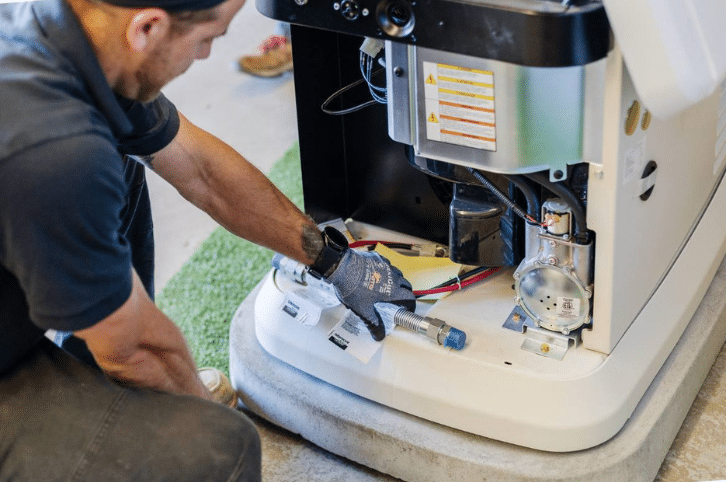
Even if you’re regularly cleaning your generator, the unit will still require professional generator service from professional technicians. Experienced techs can identify the early signs of corrosion and take steps to stop or slow it down, thus lengthening the service life of your product.
What Technicians Check In Salt-Air Environments
During their maintenance checks, technicians look for corrosion on internal and external components. They’ll check the electrical connections, cooling and airflow systems, battery conditions, and the integrity of the fuel system.
Identifying Corrosion Early Before It Affects Performance
There are many signs that the technicians will look for that indicate that the humid, salty environment is affecting the performance or integrity of the unit. Minor spotting and rusting, white powder on certain surfaces, and loose connections are all signs that the technicians will watch for. When components need replacement, the technicians will talk to you about the next steps.
Maintenance Frequency For Shoreline Generators
- Clean your generator multiple times per year following the instructions above.
- Schedule annual service from the professionals once a year, or more often as needed. Your generator may need extra service after major storms and high winds.
- Inspect your unit after every major storm.
As the unit gets older, you may need to increase professional service.
Seasonal Inspection Considerations In Connecticut
CT generator maintenance varies by season. Plan to inspect your generator before winter arrives and after the season ends.
The Atlantic hurricane season runs from June 1 to November 30; this is when your generator may be of most value to you. Schedule a professional service before the hurricane season begins, and check the unit before big storms to ensure it’s ready.
What Homeowners Can Do Between Service Visits
Performing your own maintenance and inspections between service visits is important.
- Inspect your generator for rust or buildup.
- Remove debris from the area around the generator to promote good air flow.
- Clean the generator casing (described above).
- Monitor the unit for issues with performance or strange noises. Make a service appointment when needed.
Working With A Local CT Generator Service Provider
Home generators in CT help keep homeowners comfortable and safe. To learn more about how home generators can help you, contact PE Home Generators. We provide proper installation and reliable service.
Recent News
Generac vs. Kohler: Which Whole-House Generator Is Right for Your Home?
September 29, 2026

How Long Can a Home Generator Run During a Power Outage?
September 29, 2026

Smart Homes Need Reliable Power: Keeping Modern Homes Running Without Interruption
September 3, 2026
The Most Common Problems Homeowners Face and How to Prevent Them
August 20, 2026

El Niño: What Does El Niño Mean for Connecticut and How to Be Prepared
July 29, 2026
Why Today’s Homes Are Using More Power Than Ever Before
July 27, 2026